


Product Update
More Visibility: Simpler Workflows, Stronger Warehouse Control
This month’s product updates focus on one main goal: making daily operations simpler and more visible across orders, services, and warehouse activity.
Here’s what’s new and why it matters.
Services for All Shippers (OMS & TMS)
Services are no longer limited to ELX. They are now available to all shippers and can be managed directly inside the order.
What does that mean?
Instead of creating separate service tickets for standard delivery services, services are now embedded directly into the order itself. Delivery items and related services live in one unified framework.
What’s improved:
- Single Order Framework – Items and services are managed together in one order.
- Operational Simplicity – No need for separate service tickets in standard cases.
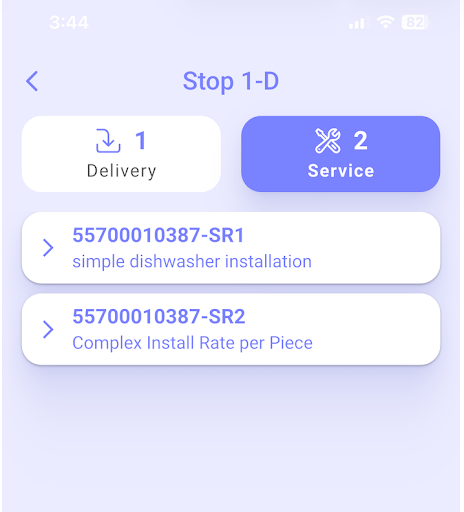
- Driver Execution & Reporting – Drivers can perform and report services directly in the app.
- Improved Visibility – Real-time tracking of service and installation progress.
- Better Control & Accountability – Clear connection between items, services, and execution milestones.
Additional Enhancements:
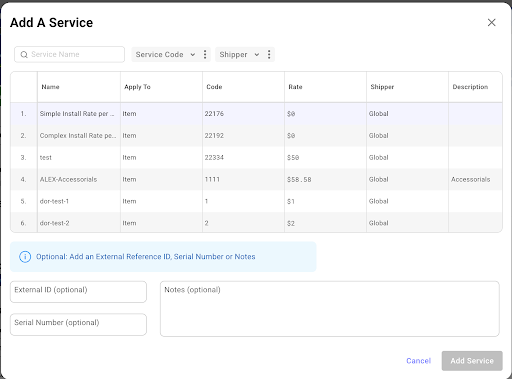
- Shippers can now configure their own accessorial/service catalog.
- Service items can be added to standard deliveries or pickup returns.
- Services can be added through the UI, APIs, order imports, reports, tracking pages, and the driver app.
- The standalone Service Ticket (Service Order) option still exists when needed.
This update makes services a native part of the delivery flow instead of something managed separately.
Lists (Mid-May Release)
Lists allow teams to group orders together and act on them as one unit.
Instead of managing orders one by one, teams can:
- Add multiple orders to a list in bulk
- Filter and view grouped orders in the orders table
- Use existing grid actions on the entire group (like adding to a manifest or exporting)
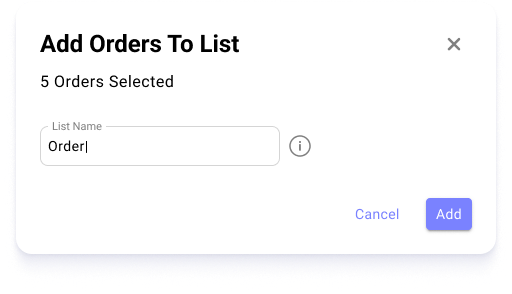
This supports real operational work queues and makes bulk actions faster and easier.
Cross-Dock Reserve, Pick-N-Fulfill (WMS – Mid-March)
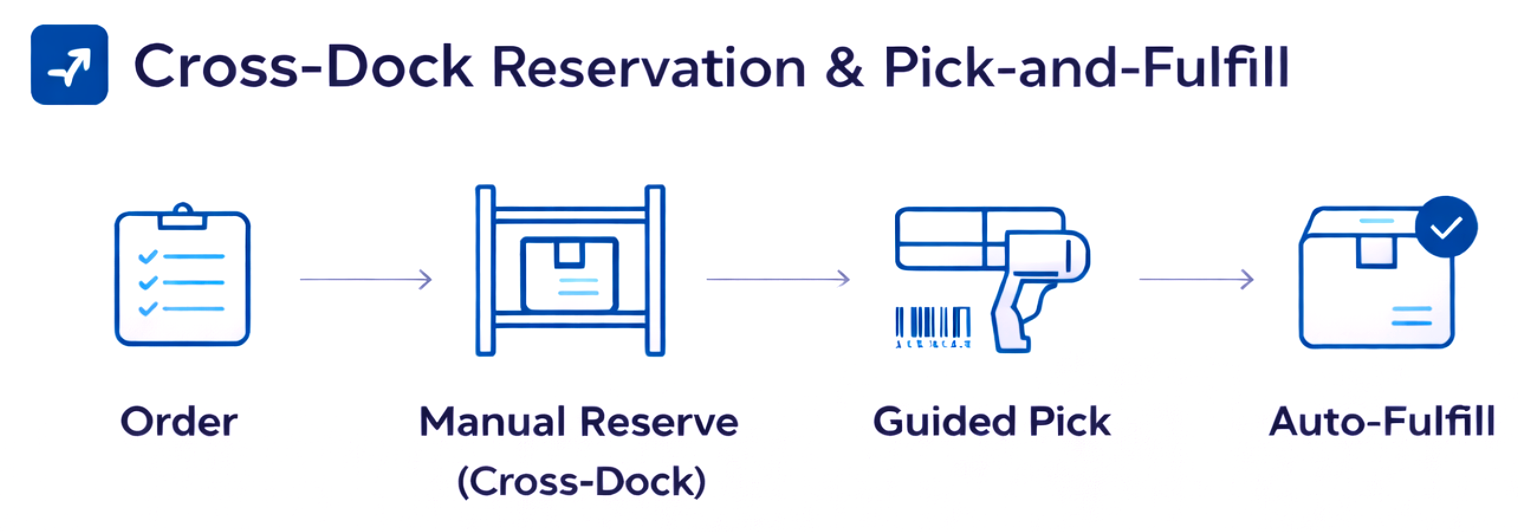
Cross-dock hubs can now reserve and fulfill local orders directly from cross-dock inventory.
Previously, this required manual workarounds. Now:
- Warehouse managers can manually reserve items per order based on SKU, shipper, and vendor availability.
- Picking and fulfillment are combined into one guided flow.
- The system guides pickers to matching unallocated inventory.
- Inventory is validated during picking.
- Items are automatically assigned to orders.
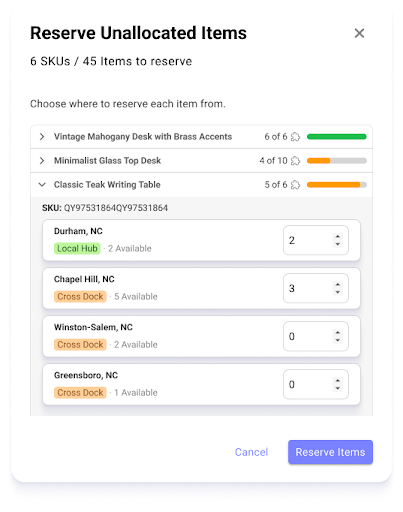
This improves accuracy and removes the need to manipulate inbound manifests or perform separate fulfillment steps.
Coming Next (Q1 Planned):
- Remote reservation support between partner hubs.
- Bulk reservation for multiple orders at once.
Warehouse Location Enhancement (Released)
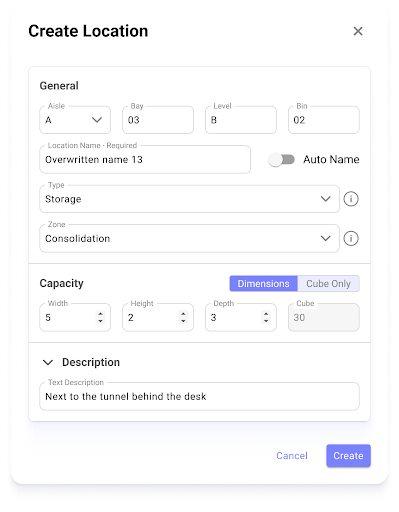
The warehouse location object has been upgraded to support more advanced operations.
Key improvements:
- Location import is now available, simplifying hub onboarding.
- Location metadata now includes code, zone, type, and capacity.
- The UI allows easier location management.
- Expanded reporting and hub management potential.
Warehouse Utilization Report (Released)
A new report helps warehouse teams manage location performance and capacity usage.
It provides:
- Visibility into empty or underperforming locations.
- Capacity usage per location.
- Support for better putaway planning.
This gives warehouse managers clearer insight into how space is being used and where improvements can be made.
In summary, this month’s updates focus on:
- Making services part of the order flow
- Enabling bulk operational workflows
- Improving cross-dock fulfillment accuracy
- Strengthening warehouse location management
- Increasing visibility into warehouse utilization
Each enhancement is designed to reduce manual work, improve visibility, and give operations teams better control over execution.