The dispatch software market is crowded. Most platforms were not built for final-mile delivery. Here is what actually matters when you evaluate your options.
The dispatch software market is crowded. There are dozens of options, from lightweight courier tools to enterprise platforms that take 18 months to implement. Most of them were not built for final-mile delivery.
Final-mile operations have a specific set of requirements — appointment windows, two-person crews, variable service times, and retailer performance reporting — that general-purpose dispatching software was not designed to handle.
Choosing the wrong platform means paying for features you don’t need, working around limitations, and watching dispatchers waste time on coordination calls that a system should be managing automatically.
This guide covers what really matters when evaluating dispatch software for final-mile carriers:

Standard dispatching platforms are built for speed and volume. A courier tool optimizes the shortest path between stops, assigns a driver, and pushes a notification. That model works when every stop is a doorstep drop with no variability.
Final-mile delivery does not work that way. A carrier managing furniture or fitness equipment is navigating appointment windows confirmed days in advance, two-person crew assignments, room-of-choice placement, assembly completion documentation, damage capture at the point of delivery, and on-time performance reporting for multiple retail shipper partners.
A single route might include stops that take 8 minutes and stops that take 55. When dispatch software cannot account for variable service times at the stop level, routes that look efficient on a screen fall apart in the field.
When it cannot assign crews as a unit, dispatchers manually pair drivers and helpers every morning. When it has no connection to the warehouse, orders miss staging windows and trucks leave with unused space.
The cost of those failures — missed appointments, redelivery attempts, and retailer charge-backs — traces back to dispatching software that was not designed for this service model.
Most dispatch platforms optimize for mileage or time. That is not enough for a carrier running multiple service types on the same route.
AI-powered route optimization understands the difference between a threshold delivery, a white glove two-person installation, and a standard drop, and will factor those variables into its route planning.
If a demo shows route optimization that treats all stops as equal, keep looking. Carriers running mixed service types on the same fleet watch their estimated arrival times drift further from reality with every stop.
The right dispatch software accounts for service level at the individual stop, adjusts for crew type and vehicle capacity, and is capable of recalculating in real time when exceptions occur mid-route. That is a fundamentally different engine from the mileage minimization logic built into most general-purpose dispatching tools.
Dispatchers cannot manage what they cannot see. Real-time delivery tracking across every active truck is not a premium add-on. It is a baseline requirement.
Real-time visibility means knowing where every driver is, what stop they are on, whether the route is running on time, and when an exception occurred — all without calling the driver.
It also means customers and shipper partners receive accurate ETAs rather than a four-hour window estimated three days prior and never updated.
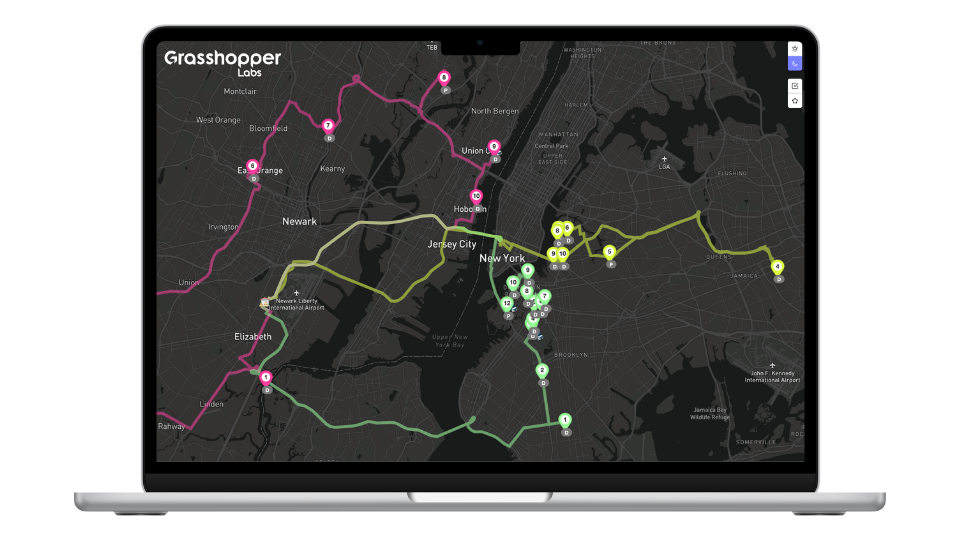
Carriers that upgrade from platforms with limited visibility consistently report the same shift: dispatcher workload drops significantly once they have access to a live truck view. They spend less time coordinating calls and more time managing the exceptions that actually require human judgment.
The driver experience determines data quality. A poorly designed driver app produces missed proof-of-delivery photos, skipped damage documentation, and manual re-entry back at the office. All of that creates downstream billing problems and unresolved claims with retail partners.
The right driver app walks a two-person crew through each stop, step by step:
Those workflows should be native to the platform, not configured as workarounds or purchased as separate modules.
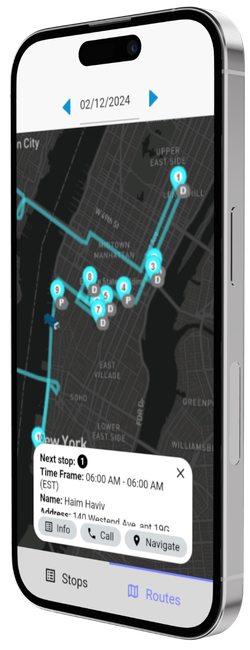
For crews handling big and bulky deliveries, the app also needs to account for the handoff between a driver and their co-pilot. A driver app built for a single person dropping parcels will not fit the workflow of a two-person white glove delivery team.
Manually scheduling deliveries is one of the most time-consuming tasks in a final-mile operation. Customer service reps have to call to confirm windows, reschedule missed appointments, and follow up after deliveries.
The cost scales as your business grows. Every new client you bring in makes the problem worse, requiring more employees — which ultimately negates your profits.
Dispatching software that automates this workflow through self-scheduling portals, automated email and SMS confirmations, and pre-delivery status updates converts that labor cost into a system cost. An operation running 500 deliveries a week with manual scheduling may employ two or three CS reps just to schedule appointments. Automated scheduling and notifications can reduce that workload by more than half.
Dispatch software that has no visibility into the warehouse creates friction at every handoff point. Orders fulfilled in the warehouse need to appear in the dispatcher’s queue automatically. Staging sequences need to match truck assignments. Damage identified on inbound receiving needs to follow the order through to delivery completion.
When dispatching software and warehouse management systems are separate, that data travels manually — usually via CSV, usually delayed, and usually missing key information.
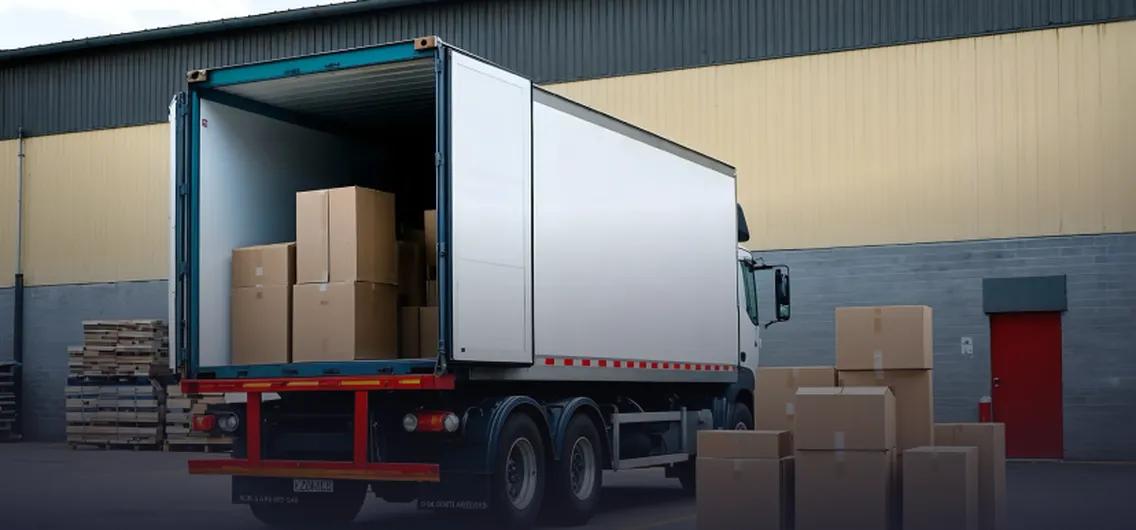
The hidden cost of disconnected logistics software is well-documented: manual reconciliation, billing delays, and failed deliveries that trace back to data that never made it from one system to the other. The cleanest solution is a transportation management system that includes warehouse management natively. When dispatch and warehouse functions share the same database, the handoff between the dock and the truck becomes automatic — no CSV exports, no import mapping, no reconciliation at the end of the month.
The most common mistake growing final-mile carriers make is choosing dispatch software that works at current volume but was not built for their service model.
Lightweight courier platforms are easy to implement and inexpensive to start. For small parcel and food delivery, they work well. For a final-mile carrier managing retail shipper relationships, appointment-based deliveries, and two-person crews, they break down fast. Features that seem adequate at 200 deliveries a month become serious operational gaps at 1,000.
Enterprise platforms carry the opposite risk. Enterprise-grade systems are expensive, slow to implement, and built for massive distribution operations with dedicated IT teams. A carrier scaling from 20 to 100 trucks does not need 18 months of configuration and six-figure implementation costs to go live.
The right dispatcher software sits between those two extremes: purpose-built for the service complexity of final-mile operations, fast to implement, and designed to scale without adding proportional overhead or headcount.
Whether evaluating Grasshopper Labs or any other routing and dispatch software, these questions should be asked on every demo call before you decide what system to go with.
Does the route optimization engine account for different service types at the stop level? Can the platform distinguish between a 10-minute threshold delivery and a 45-minute white glove installation, and build that into the route? Ask to see a live demo using a mixed-service route. If the answer requires a manual override or a configuration workaround, the platform doesn’t meet minimum industry standards.
How does the platform handle two-person crew dispatch? Can crews be assigned as a unit, or does each driver need to be managed individually? Can the system account for crew availability and skill requirements at the stop level? If crew assignment is a manual process outside the routing engine, dispatchers are wasting hours on something the software should handle automatically. Ask to see it live and count how many clicks it takes.
Does the platform include native warehouse management software, or will a separate integration be required? If the answer is “we integrate with most WMS platforms,” treat that as a risk signal. Every integration point is a potential failure point, and TMS and WMS integration delivers the most value when both systems share the same data model — not when they are connected through a third-party platform.
Can dispatchers see every truck’s position, current stop, and on-time status from a single screen? Or do they have to toggle between systems? Ask to see the live dispatch console during the demo. If visibility requires multiple logins, a separate tracking tool, or any form of manual input to stay current, it is not actually real-time visibility.
Ask to see what monthly cost looks like at current volume, at 2x, and at 5x. Get the pricing structure in writing before any contract is signed. Some platforms price per driver, some per stop, some per terminal location. Understanding the full cost model at scale prevents a situation where business growth makes the software unaffordable at the moment it matters most.
Carriers that move from a general-purpose dispatching platform to a purpose-built final mile delivery software consistently report the same operational shifts: dispatchers spend less time on coordination calls, failed delivery rates go down, and billing cycles get faster because data feeds directly into invoicing rather than requiring manual reconciliation across multiple systems.
Been using GH for almost 5 years. It makes TMS systems so much easier and accessible for companies like Blueprint Logistics, LLC to succeed in this industry.
That shift from manual coordination to automated workflows is where the operational leverage lives. Grasshopper Labs was built specifically for this environment by a founding team that ran high-volume final-mile operations at Deliveright, processing over 10,000 big and bulky deliveries a month, before building the platform. Grasshopper Labs is designed by operators, for operators.
For carriers trying to quantify the financial case for switching, the Grasshopper Labs ROI calculator breaks down the actual cost of manual processes and what automation recovers across dispatch, customer service, and warehouse operations. Most mid-market operations find the payback period is measured in months, not years.
Dispatch software is not a light decision for a final mile carrier. The platform that serves a courier operation or a food delivery fleet was not designed for appointment scheduling, two-person crew management, white glove service documentation, or retailer SLA reporting.
The evaluation criteria are clear: service-level-aware route optimization powered by AI, real-time fleet visibility, a driver app built for delivery crews, automated customer scheduling, and native or tightly integrated warehouse management.
Carriers that check all five stop wasting dispatcher hours on coordination work and start running a tighter, more scalable operation.